
From Floor to Furniture: The Secret Life of Your Recycled Cotton Blanket
When you curl up under a soft, woven blanket, the last thing you’re probably thinking about is a factory floor thousands of miles away. But for our collection of recycled cotton blankets, that floor is exactly where their story begins.
In the heart of the global garment industry—across hubs in India, Bangladesh, and Vietnam—the process of making our clothes creates a staggering amount of "silent" waste. Before a single T-shirt ever reaches a shop shelf, roughly 15% of the fabric is left behind on the cutting room floor as offcuts and remnants. For decades, these high-quality scraps were destined for the landfill or the incinerator.
Today, we’re doing things differently. Here is how your favourite home accessory is helping to solve one of the fashion industry’s biggest environmental problems.
The True Cost of Virgin Cotton
To understand why recycled remnants matter, we have to look at the alternative. Virgin cotton is one of the most resource-intensive crops on the planet. Producing just one kilogram of conventional cotton can require up to 10,000 litres of water—that is enough for one person to drink for over nine years.
Furthermore, the conventional cotton industry is responsible for nearly 16% of the world’s insecticides. When we choose to manufacture from remnants, we bypass this entire environmental "debt." We aren't planting new seeds, diverting rivers for irrigation, or spraying chemicals; we are simply rescuing what has already been created.
A Water-Saving Hero
By mechanically recycling these "pre-consumer" cotton scraps—shredding them down and re-spinning them into fresh, durable yarn—we eliminate nearly 99% of the water consumption associated with cotton production.
One of our recycled blankets effectively "saves" the equivalent water of dozens of T-shirts. In a world where water scarcity affects millions, moving toward this circular model isn't just a design choice; it’s a necessity.
The Beauty of No-Dye Design
One of the most remarkable things about using remnants is the colour. In many cases, these cotton scraps are sorted by shade before they are shredded. Because the original fabric was already dyed, the recycled yarn often requires no new dyeing.
Textile dyeing is the second-largest polluter of water globally. By skipping this step, we keep harmful chemicals out of our waterways and significantly reduce the carbon footprint of your home decor—often by as much as 80% compared to virgin alternatives.
More Than Just a Blanket
Choosing a recycled cotton blanket is a vote for a "circular" future. Currently, less than 1% of the material used in the global clothing industry is recycled back into new products. By bringing these remnants into your home, you are helping to close that loop.
It’s proof that sustainability doesn't have to mean sacrifice. These blankets are heavy, breathable, and rich in texture—carrying a story of rescue and renewal in every thread.
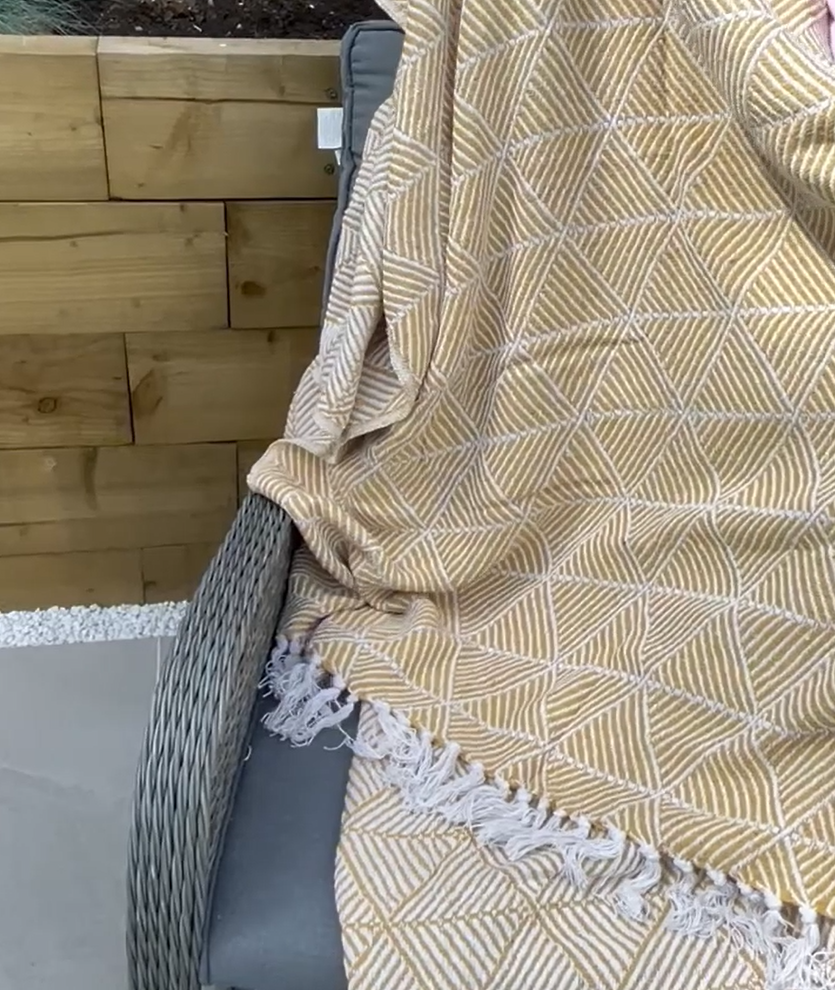
Beautifully warm and heavy blanket made from recycled cotton, covered with a mustard yellow and white triangle zigzag pattern, edged on two sides with coordinated white tassels.
Ideal for snuggles on a sofa, a throw on a bed or a cool evening outside.
The blanket is covered in a regular triangular zigzag pattern.
Measures 228cm x 254cm - almost square.
A truly wonderful eco blanket.
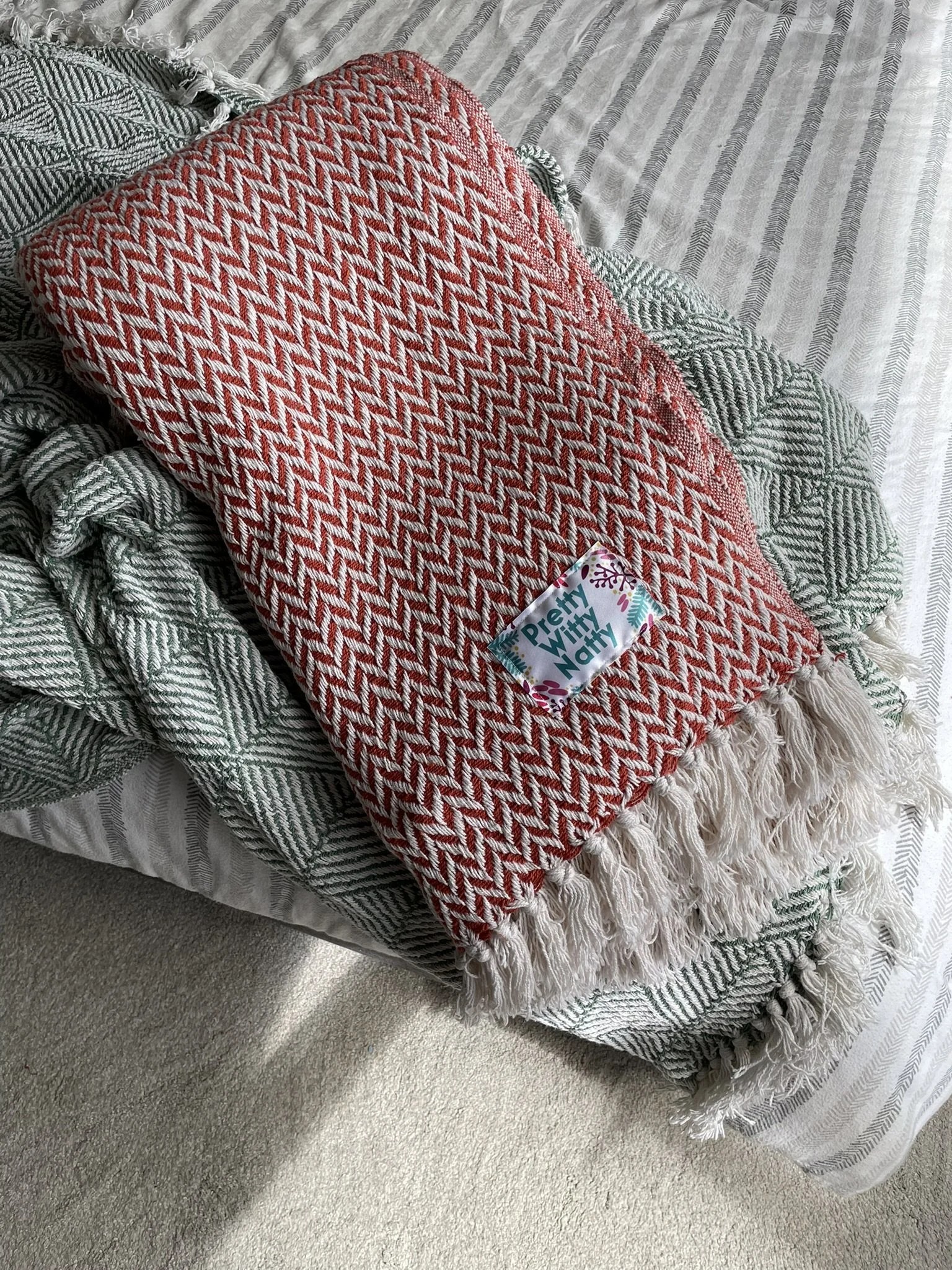
Beautifully warm and heavy blanket made from recycled cotton, covered with a fabulous pumpkin sunset orange and white hounds tooth zigzag pattern, edged on two sides with coordinated white tassels.
Ideal for snuggles on a sofa, a throw on a bed or a cool evening outside.
The blanket is covered in a regular zigzag pattern.
Measures 228cm x 254cm - almost square.
A truly wonderful eco blanket.
Cited References & Data Sources:
The 15% Waste Rule: Fletcher, K. (2014). Sustainable Fashion and Textiles: Design Journeys.
Water Consumption: The Water Footprint Network / WWF - "The 10,000-litre cotton rule."
Chemical/Insecticide Usage: Environmental Justice Foundation (EJF) - Cotton production reports.
Global Textile Waste (92M Tonnes): Pulse of the Fashion Industry Report (Global Fashion Agenda & BCG).
Recycling Rates (<1%): Ellen MacArthur Foundation - "A New Textiles Economy: Redesigning fashion’s future."
Carbon & Energy Savings: WRAP (Waste & Resources Action Programme) - Sustainable Clothing Guide.
… or maybe you want to read more on:
This Article Topic Tags