
The Truth About Brown Glass: Why Amber Packaging Is More Sustainable Than You Think
Brown (amber) glass has picked up an unfair reputation over the years. Many people assume it’s “harder to recycle” or even “non‑recyclable,” but the reality is far more encouraging. Amber glass is 100% recyclable, infinitely recyclable, and in many cases, more sustainable than clear glass. The key is understanding how colour affects the recycling process — and why amber glass plays a surprisingly important role in the circular economy.
Why Colour Matters in Glass Recycling
All container glass — clear, green, and brown — can be recycled endlessly without losing quality. But colour sorting is essential. Amber glass gets its rich tone from added iron, sulfur, and carbon, which permanently tint the material. Because of this, amber glass cannot be mixed with clear glass during recycling. Even small amounts of brown glass in a clear batch can affect the clarity of the remelt.
This is why some local systems label amber glass as “harder to recycle,” but the truth is simpler: It just needs to be sorted correctly.
Once sorted, amber glass is one of the most efficient materials to recycle.
Amber Glass Often Contains More Recycled Material
According to FEVE (the European Container Glass Federation), amber glass can incorporate higher levels of recycled cullet than clear glass because its colour naturally masks impurities. This means manufacturers can use more recycled material without compromising quality.
FEVE notes that recycled content in amber bottles is often significantly higher than in flint (clear) glass, which requires very pure cullet to maintain transparency.
This makes amber glass a powerful driver of circularity.
Recycling Glass Saves Significant Energy
One of the biggest sustainability wins for glass is energy reduction.
The Glass Packaging Institute confirms that every 10% increase in recycled cullet reduces furnace energy use by 2–3%. This is because cullet melts at a lower temperature than raw materials like sand and soda ash.
EPA data reinforces this: recycling glass reduces energy consumption and emissions compared to producing new glass from virgin materials.
In short: More cullet = less energy = lower carbon footprint.
What Can’t Be Recycled — and Why It Matters
The real contaminants in glass recycling aren’t brown bottles — they’re items made from different glass chemistries:
Pyrex and ovenware (borosilicate glass)
Drinking glasses and crystal (often contain lead or additives)
Mirrors and window glass (coatings and different melting points)
These materials melt at different temperatures and can cause defects in new containers. WRAP and Recycle Now both warn that these items should never go into kerbside glass bins.
Amber Glass: A Quiet Sustainability Champion
Amber glass also offers functional benefits: it naturally filters UV light, helping protect sensitive products like essential oils, botanicals, and natural skincare. This reduces spoilage and extends shelf life — a sustainability win that clear glass simply can’t match.
And because amber glass is durable and attractive, it’s perfect for reuse at home. An empty amber jar makes an excellent spice container, propagation vessel, or bathroom organiser long before it enters the recycling loop.
Amber glass isn’t a problem.
It’s part of the solution.
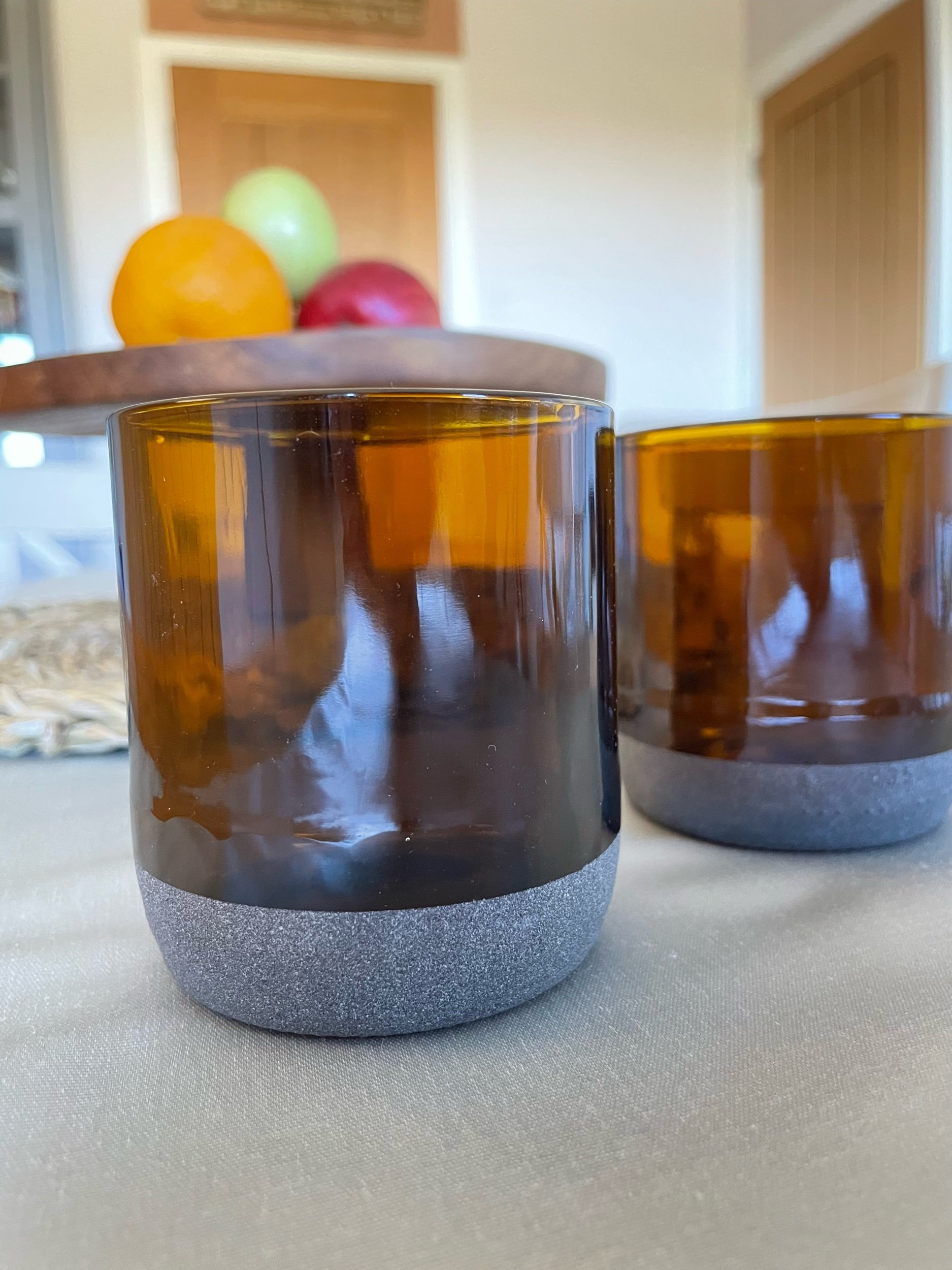
Beautiful and tactile brown coloured drinking glasses.
Sold in pairs.
Made from upcycled beer bottles. Collected from the holiday destination of Goa, India where they have been washed, cut, shaped and polished to make these fantastic glasses.
Approximately 8cm tall and roughly 7cm across the top.
Deep brown in colour with a sanded, white/grey band around the bottom of each glass. Smooth but tactile.
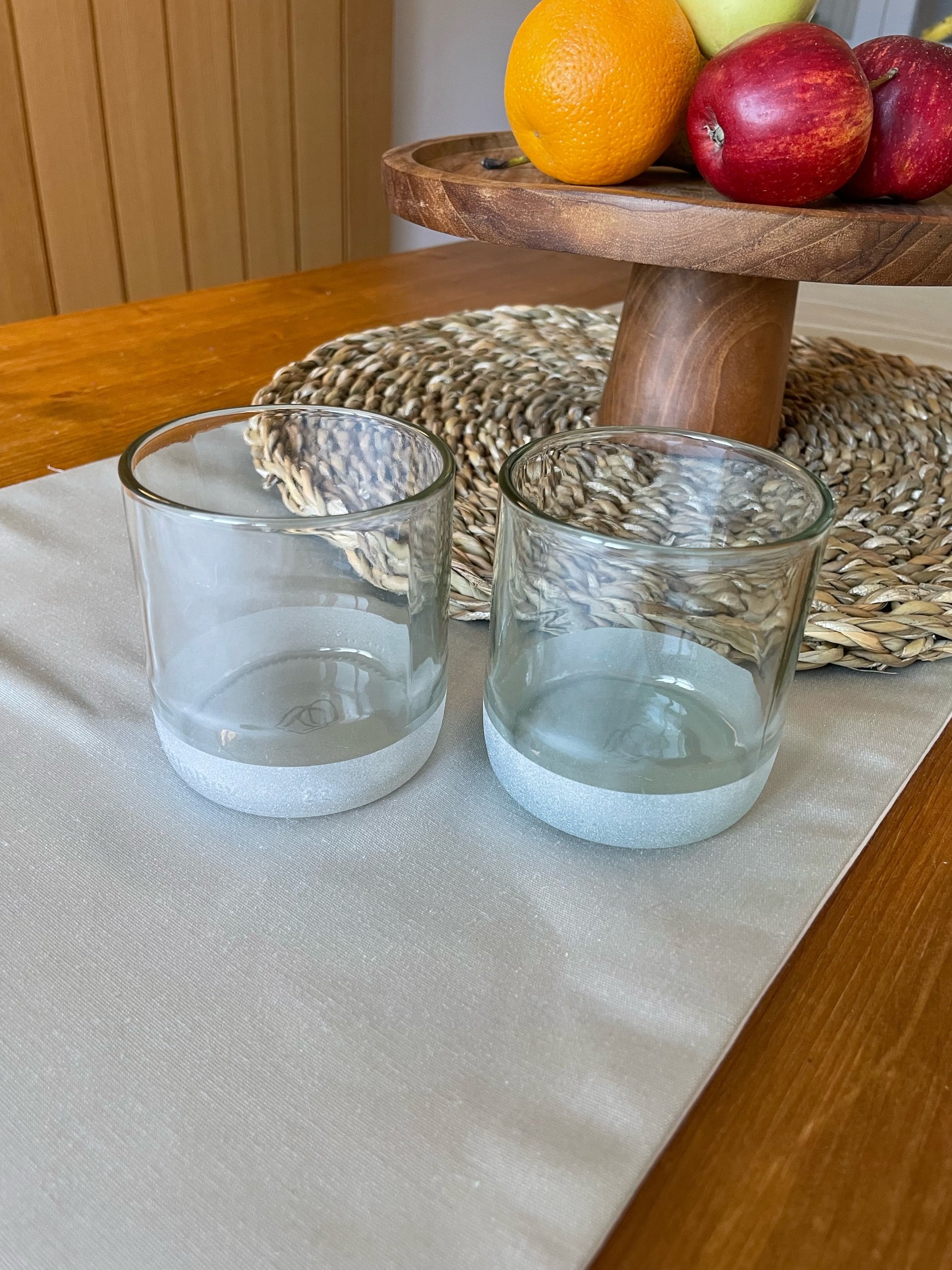
Upcycled glass drinking glasses made from repurposed beer bottles.
Sold in pairs.
Made from upcycled beer bottles. Collected from the holiday destination of Goa, India where they have been washed, cut, shaped and polished to make these beautiful glasses.
Approximately 8cm tall and roughly 7cm across the top.
Transparent and clear in colour with a sanded, white band around the bottom of each glass. Smooth but tactile.
Also available in brown.
Cited References & Data Sources:
FEVE – Recycled content & colour sorting : Glass is infinitely recyclable;
Importance of colour‑sorted recycling; Amber glass can incorporate higher recycled content than clear glass; Industry explanation of closed‑loop recycling for container glass
Glass Packaging Institute – Energy savings from cullet : Energy savings from cullet: every 10% recycled glass reduces furnace energy use by 2–3%; Recycling glass reduces raw material use and CO₂ emissions; Glass recycling is a closed‑loop system with no loss of quality
EPA – Benefits of glass recycling: Environmental benefits of glass recycling; Glass recycling reduces energy consumption and greenhouse gas emissions; Overview of how glass behaves in the waste stream
WRAP – What glass can and cannot be recycled : Guidance on what types of glass are NOT recyclable; Confirms that Pyrex, ovenware, drinking glasses, mirrors, and window glass contaminate recycling; Explanation of why different glass types cannot be mixed
Recycle Now – Glass contamination guidance : Practical consumer guidance on acceptable vs. non‑acceptable glass items; Reinforces that ceramics, heat‑resistant glass, and treated glass must not enter kerbside recycling; Confirms the need for colour‑sorted recycling in many UK systems
… or maybe you want to read more on:
This Article Topic Tags