
The Amber Transformation: How a Beer Bottle Becomes Your Favourite Glass
If you’ve ever walked along a sun-drenched beach, you know the sparkle of the ocean is often interrupted by something less natural: the glint of a discarded beer bottle. In many coastal resort areas, particularly in India, the sheer volume of glass waste generated by tourism can overwhelm local waste systems.
At our store, we believe that "waste" is simply a resource that hasn't found its purpose yet. That’s why our amber glassware collection doesn't start in a factory—it starts on the shores of India, where discarded brown beer bottles are rescued, reimagined, and reborn.
Why Brown Glass is a "Sustainability Hero"
There is a common misconception that brown (amber) glass is a "lower quality" material because it is harder to recycle in standard mixed-waste bins. In reality, brown glass is a marvel of functional design.
The amber hue is created by adding carbon and sulfur during the melting process. This isn't just for aesthetics; brown glass blocks over 90% of harmful UV rays. In its first life, this protected the beer inside from "light-strike." In its second life as your new favorite water or juice glass, that same durability makes it incredibly resilient and light-protective.
The "Beach to Table" Process
While most glass recycling involves crushing bottles into "cullet" and melting them down at extreme temperatures, our upcycling process is much more energy-efficient.
Instead of an energy-intensive furnace, these bottles undergo a precision cold-cut process. The bottoms of the bottles are carefully sliced, and the edges are painstakingly fire-polished until they are smooth, rounded, and safe. By repurposing the glass in its original form rather than melting it, we save approximately 40% of the energy required for traditional glass manufacturing.
Solving the Coastal Waste Crisis
The environmental impact of this process goes beyond just saving energy. In regions where glass recycling infrastructure is limited, bottles often end up in landfills—where they don’t decompose—or worse, they break into hazardous shards on our beaches and end up in delicate marine ecosystems.
By sourcing these bottles specifically from beach resorts, we are directly contributing to the cleanup of coastal environments. Every glass in our collection represents one less piece of litter on a shoreline and one less "forever" item in a landfill.
Beauty in Every Bubble
Because these glasses are made from real bottles, each one carries a unique character. You might notice slight variations in the thickness of the glass or tiny, charming imperfections that tell the story of its journey from a seaside sunset to your dining table.
Choosing upcycled amber glass is a statement. It says that you value the history of an object and the health of our oceans. It’s proof that with a little craftsmanship, yesterday’s beach litter can become today’s most beautiful conversation piece.
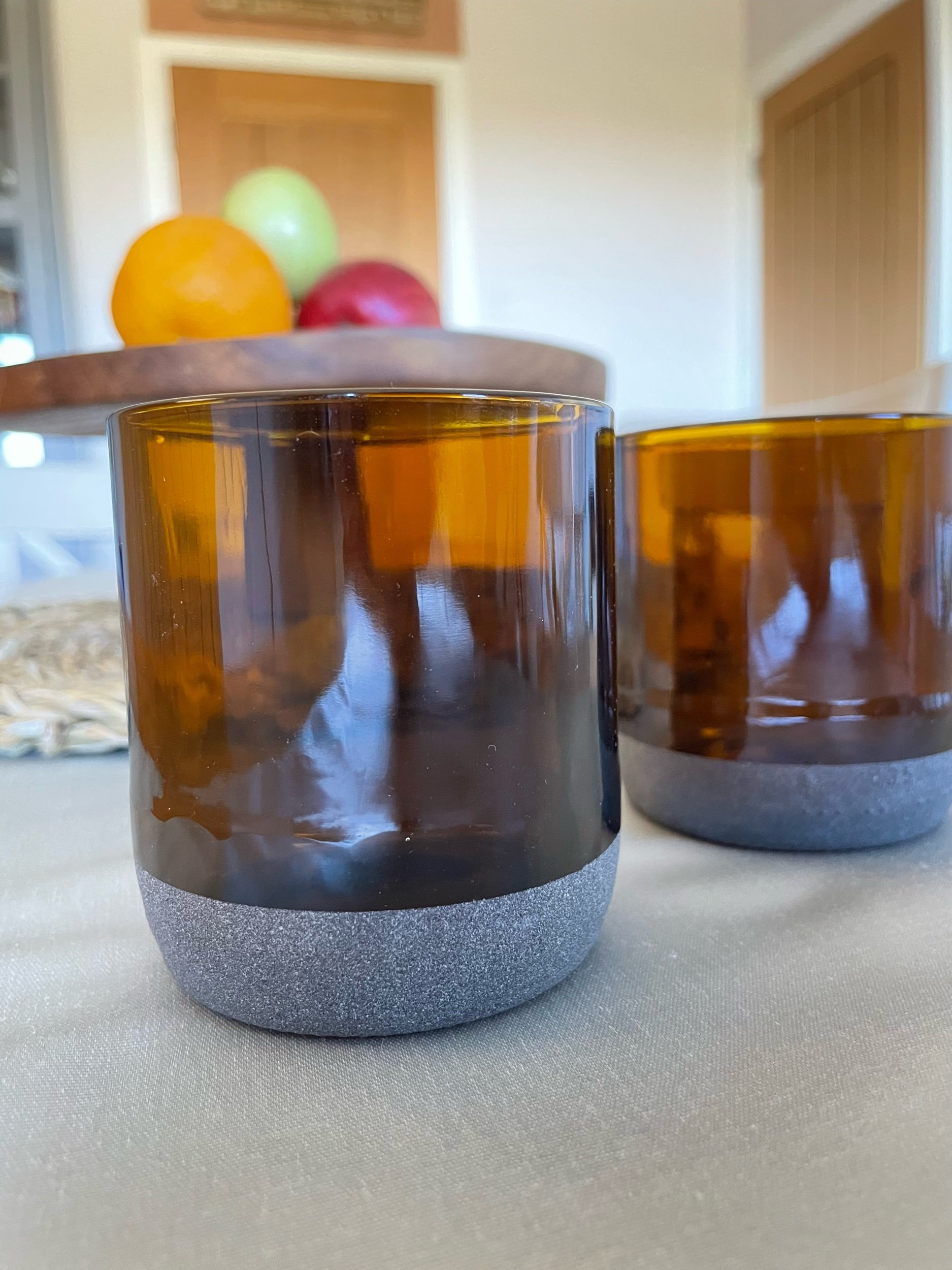
Beautiful and tactile brown coloured drinking glasses.
Sold in pairs.
Made from upcycled beer bottles. Collected from the holiday destination of Goa, India where they have been washed, cut, shaped and polished to make these fantastic glasses.
Approximately 8cm tall and roughly 7cm across the top.
Deep brown in colour with a sanded, white/grey band around the bottom of each glass. Smooth but tactile.
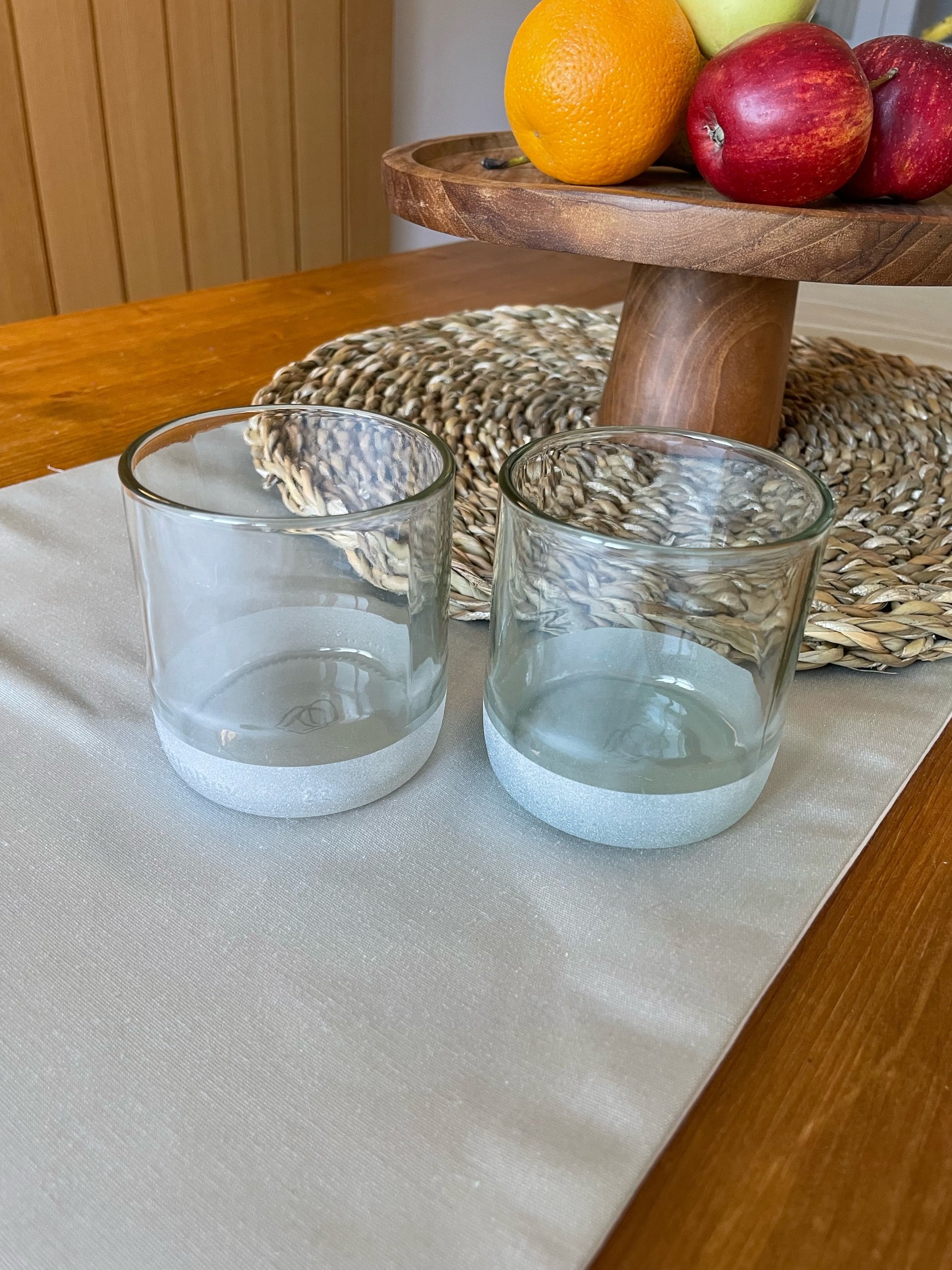
Upcycled glass drinking glasses made from repurposed beer bottles.
Sold in pairs.
Made from upcycled beer bottles. Collected from the holiday destination of Goa, India where they have been washed, cut, shaped and polished to make these beautiful glasses.
Approximately 8cm tall and roughly 7cm across the top.
Transparent and clear in colour with a sanded, white band around the bottom of each glass. Smooth but tactile.
Also available in brown.
Cited References & Data Sources:
UV Protection Stats: Glass Packaging Institute (GPI) - Technical reports on amber glass and light filtration.
Energy Savings (40%): British Glass / FEVE (European Container Glass Federation) - Data on energy reduction through cullet and reuse.
Glass Recycling Persistence: WRAP (Waste & Resources Action Programme) - "Glass: The Forever Material" impact study.
Ocean Waste Data: United Nations Environment Programme (UNEP) - Reports on marine litter and the tourism industry in coastal South Asia
… or maybe you want to read more on:
This Article Topic Tags