
The Mindful Stitch: How a Lockdown Hobby Became a Lesson in Circularity
During the quiet, uncertain days of the 2020 lockdown, many of us went looking for a way to ground ourselves. For me, that grounding was found in a pile of fabric remnants—scraps of heavy linen, floral cotton offcuts, and sturdy curtain ends that were too small for a table runner but too beautiful to bin.
What began as a way to pass the time soon transformed into a deep lesson in mindfulness and the power of the "slow craft" movement. The result? Our collection of handcrafted, recycled peg bags.
More Than Just a Bag
At first glance, a peg bag is a humble household item. But in the world of sustainable design, it represents something much larger: the elimination of waste. In the textile industry, these "micro-remnants" are often the first things to be discarded because they are seen as too difficult to work with on a commercial scale.
However, these small pieces of fabric still hold all the "embodied energy" of their creation—the thousands of litres of water used to grow the cotton and the carbon emitted during their manufacture. By choosing to piece these scraps together, we ensure that not a single thread of that energy goes to waste.
The Psychology of Making
There is a profound mental health benefit to the process of construction. Research into "flow state"—the mental state of being fully immersed in an activity—shows that creative tasks requiring hand-eye coordination and design thinking, like sewing, can significantly reduce cortisol levels.
During lockdown, the "design, construct, repeat" nature of making these bags provided a much-needed sense of agency. Taking a "discarded" scrap and figuring out how to reinforce the seams for outdoor durability or how to pattern-match a small floral print requires focus and textile skill. It turns a chore into a mindful ritual. When you use one of our peg bags, you’re not just buying a utility item; you’re holding a product of intentional, quiet craftsmanship.
Why Recycled Textiles are the Best Choice for the Garden
From a practical standpoint, the high-quality remnants we use—often from heavy-duty upholstery or curtains—are actually far superior to the flimsy, synthetic peg bags found in most supermarkets.
These fabrics were designed to withstand sunlight and wear. By repurposing them, we are preventing the production of new polyester (plastic) bags that eventually shed microplastics into our gardens and soil. According to current data, household textiles are a significant source of microplastic pollution; by sticking to natural, recycled remnants, we keep our laundry routines as green as the grass beneath the line.
A Small Step Toward a Circular Home
The story of these peg bags is a reminder that sustainability doesn't always have to be a grand gesture. Sometimes, it’s about looking at a "useless" scrap of fabric and seeing a beautiful, functional tool.
It’s about slowing down, valuing the skills of the maker, and choosing items that have a soul. Every time you hang out your washing, we hope these bags remind you that even the smallest pieces can be part of a much bigger, more beautiful picture.
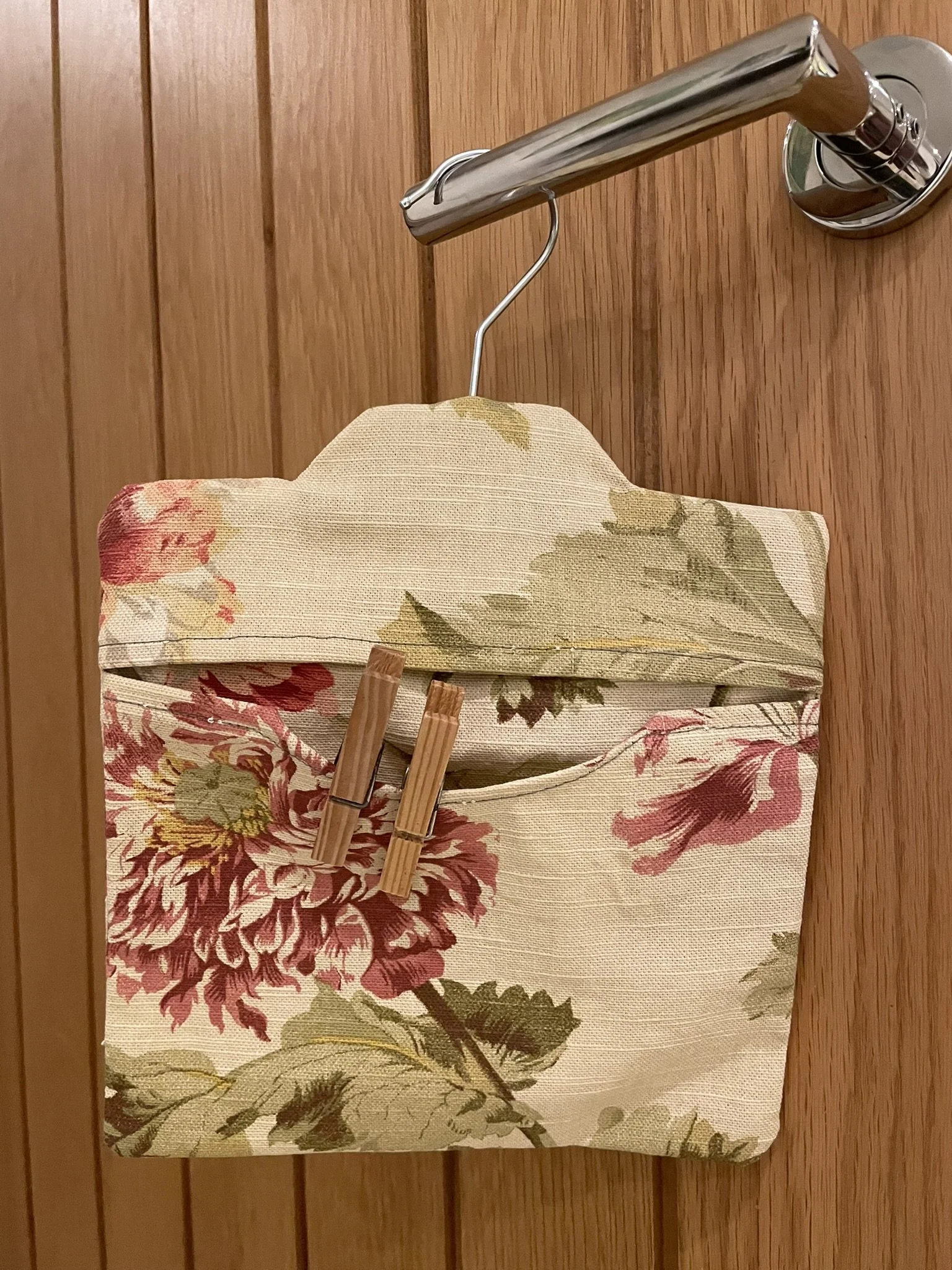
Lovely biscuit-coloured canvas fabric covered in dusty faded large flowers, hanging 'vintage style' peg bag to help you with your laundry. The colour is more beige than yellow, and the large flowers are a dusty red.
Just so handy! Opening a third of the way down, with an open oval, opening all the way across the bag.
This peg bag measures approximately 20cm wide x 25cm tall, with the hook rising 5cm above that.
Can easily hold and store all your laundry pegs tidily, and the handy hook means you can hang and slide it along your washing line. The bag it's self, isn't too deep, meaning pegs are easy to grab as you hang your washing out to dry.
Cited References & Data Sources:
The Journal of Positive Psychology - Creative activities and the "upward spiral" of wellbeing: Research on how daily creativity improves mood.
British Journal of Occupational Therapy - The therapeutic benefits of knitting/sewing: Links between repetitive textile crafts and stress reduction.
University of Leeds (2023) - Microplastics in the Home: Study on how synthetic household textiles contribute to microplastic shedding.
Ellen MacArthur Foundation – How the Circular Economy tackles climate change: Data on the environmental cost of "embodied energy" in fabric scraps.
Friends of the Earth - The Problem with Plastic: Comparison of natural fibres vs. synthetic household accessories.
…or maybe you want to read more on:
This Article Topic Tags