
The Second Act: Giving Discarded Curtains a New Life at the Table
In the world of interior design, trends move fast. A room that felt fresh three years ago might suddenly feel "dated," leading many of us to swap out our soft furnishings—curtains, cushions, and throws—for a new look. While this keeps our homes vibrant, it creates a quiet crisis for the planet. In the UK alone, an estimated 1.45 million tonnes of used textiles are generated annually.
A significant portion of this isn't worn-out clothing; it’s high-quality household fabric, like curtains, that still has decades of life left in it. At Verdesca, we believe these fabrics deserve a "second act." That’s why we rescue these remnants and transform them into beautiful, handcrafted table runners.
The Problem with "Fresh" Fabrics
When we discard a set of curtains just because we want a change of scenery, we aren't just throwing away fabric—we’re throwing away the immense resources that went into making them. Textile production is the fourth-highest impact category on the environment in the EU.
It takes roughly 2,500 litres of water to produce just one cotton T-shirt; for a full set of heavy curtains, that number can climb into the tens of thousands. Furthermore, when these items end up in general waste, they contribute to a massive problem. In 2021, UK homes threw roughly 711,000 tonnes of textiles into general rubbish bins. Once in a landfill, even natural fibres like cotton release methane—a potent greenhouse gas—as they decompose.
Upcycling: The Ultimate Energy Saver
While recycling (breaking down fabrics to make new yarn) is good, upcycling is even better for the environment. Upcycling takes a finished material and gives it a new purpose with minimal energy use. By cutting and sewing existing curtains into table runners, we bypass the most environmentally damaging stages of the textile lifecycle: raw material extraction, spinning, and industrial dyeing.
Industrial dyeing and finishing alone are responsible for about 3% of global CO2 emissions every year. By choosing an upcycled runner, you are opting for a product that has already "paid its carbon debt."
Bringing a Story to Your Table
There is a unique charm in a table runner made from a vintage floral curtain or a heavy, textured linen remnant. These pieces carry a history that mass-produced, store-bought linens simply cannot match.
When you set your table with one of our upcycled runners, you’re doing more than just protecting your furniture. You are participating in a circular economy—one that values craftsmanship over consumption and sees the potential in what others have "discarded."
It’s a simple shift that makes a big difference. By rescuing these textiles from the landfill, we’re not just making your dining room look better; we’re helping our planet breathe a little easier.
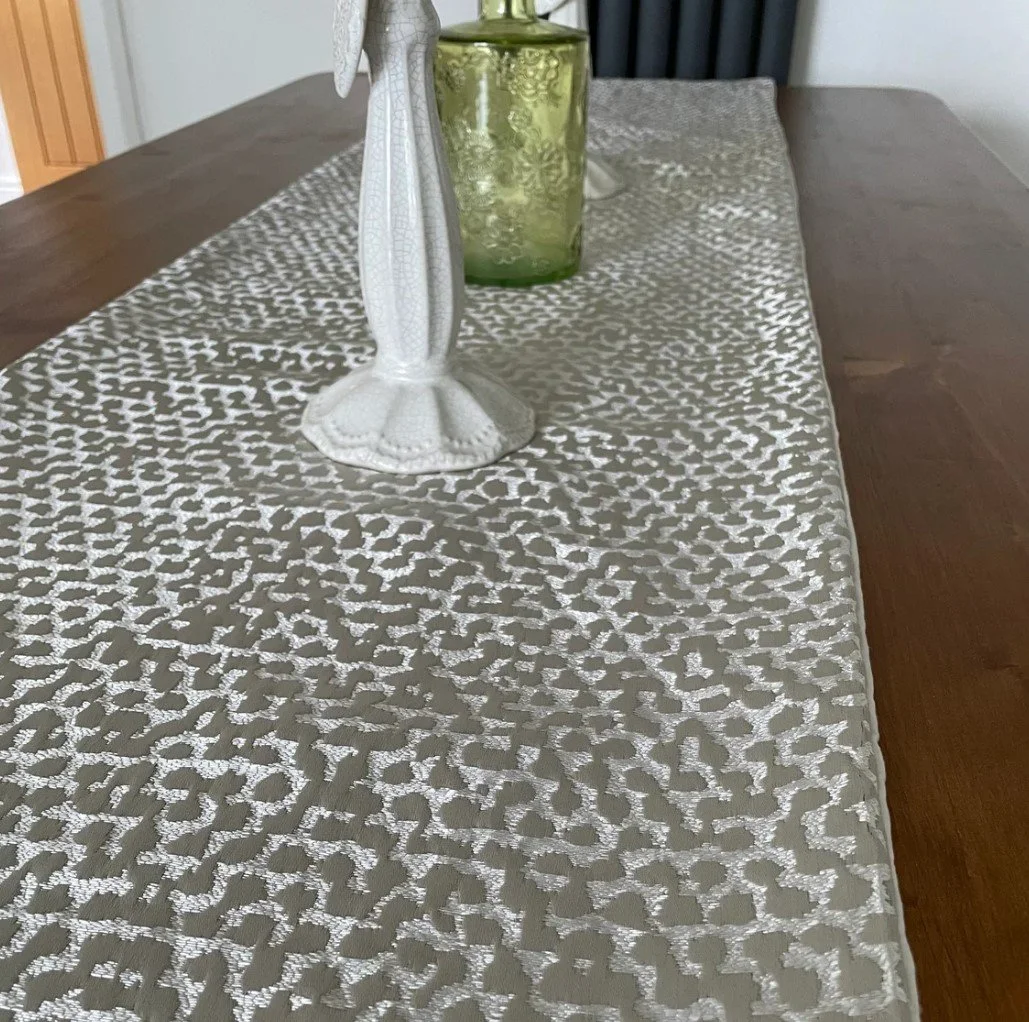
Long table runner covered with a highly tactile silver and white leopard print pattern. Fully lined with a white poly mix material across the back.
Silky style polyester fabric, a lovely chic fabric, a supremely shimmery look for your dining table.
Measuring 30cm wide x 150cm long.
We’re big on avoiding waste here at PrettyWittyNatty. We make new, beautiful and used items from things heading to landfill. For example, this lovely table runner was handmade from an off cut from curtain manufacture, which otherwise would have been thrown out. Laundered, ironed and lovingly sewn with white Guttermann recycled polyester thread; itself made from recycled single-use water bottles.
If you love it, buy it now before it goes to someone else!
And then you can brag about how environmentally friendly you are!
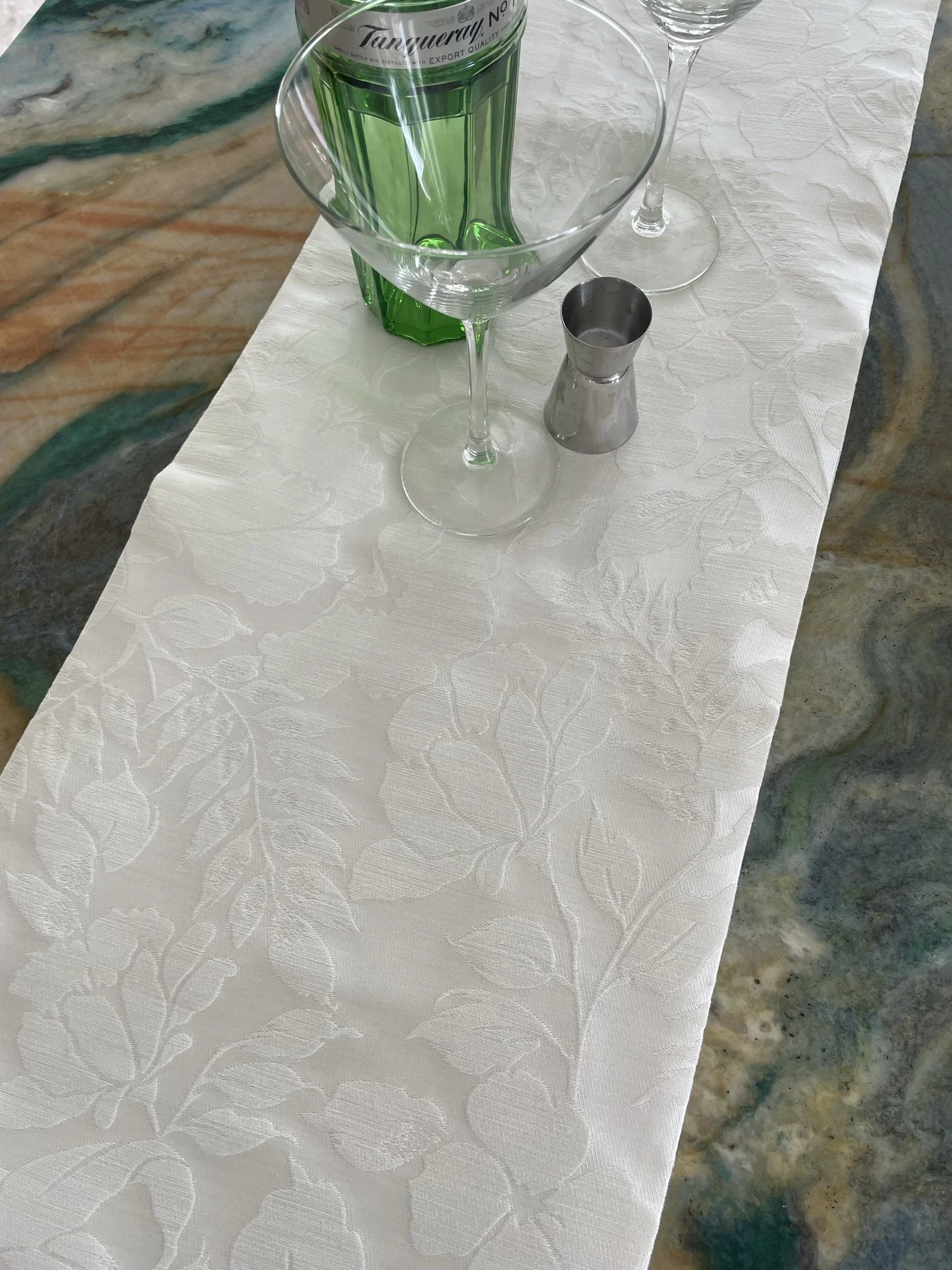
Beautiful long shimmery white cream table runner. Silky base with embossed flowers and leaves across the face. Backed with a white polycotton.
Goes beautifully with silver and whites, wood table tops, or cream and grey table decors. Perfect for your gin bar, wedding card & gifts table or the beautiful base layer for your wedding cake table.
Measures 28cm wide x 160cm long. Square flat ends.
Medium weight polyester mix fabric - will survive in a gentle wash and can be ironed if desired.
Cited References & Data Sources:
WRAP (2024) - Textiles Market Situation Report: UK textile waste generation and disposal statistics.
Circular Innovation Lab - Textiles Impact Report: Environmental ranking of textile consumption.
2EA Energy - Textile Waste Effects: Water usage and landfill decomposition data.
Alchemie Technology - Textile's Carbon Footprint: CO2 emissions from industrial dyeing.
Science Direct (2024) - Carbon–water–energy footprint impacts: Analysis of the environmental benefits of avoiding new dyeing processes.
Tayside Reusers - Impact of Textile Waste: Breakdown of UK landfill and incineration volumes.
…or maybe you want to read more on:
This Article Topic Tags