
The Energy of Glass: Why Recycling That Bottle Saves 40% of the Energy
Glass is one of the few materials that can be recycled endlessly without any loss in quality or purity. Yet the most compelling reason to recycle it isn't just about keeping bottles out of landfills — it's about energy. Making new glass products from recycled glass (known as cullet) consumes roughly 40 percent less energy than making new glass from raw materials, because cullet melts at a much lower temperature.
That energy saving is no small matter. Glass manufacturing is an energy-hungry process, and the UK glass sector is working hard to cut its footprint. According to British Glass, the industry body, every tonne of glass re-melted saves around 580 kg of carbon dioxide emissions, while also reducing the energy needed to make new glass and the reliance on virgin raw materials. For each 10% increase in cullet in the furnace mix, energy consumption drops by roughly 2.5% — and a single tonne of cullet saves about 1.2 tonnes of virgin materials like sand, soda ash, and limestone.
The UK is already a strong performer here. British Glass reports a glass recycling rate of 74.2%, one of the highest of any packaging material, and the sector has set an ambition to reach a 90% collection rate by 2030. That matters because every bottle that makes it back into the loop chips away at industrial energy demand — and because glass is infinitely recyclable, that jar you rinse out today could be back on a shelf as a brand-new container within weeks.
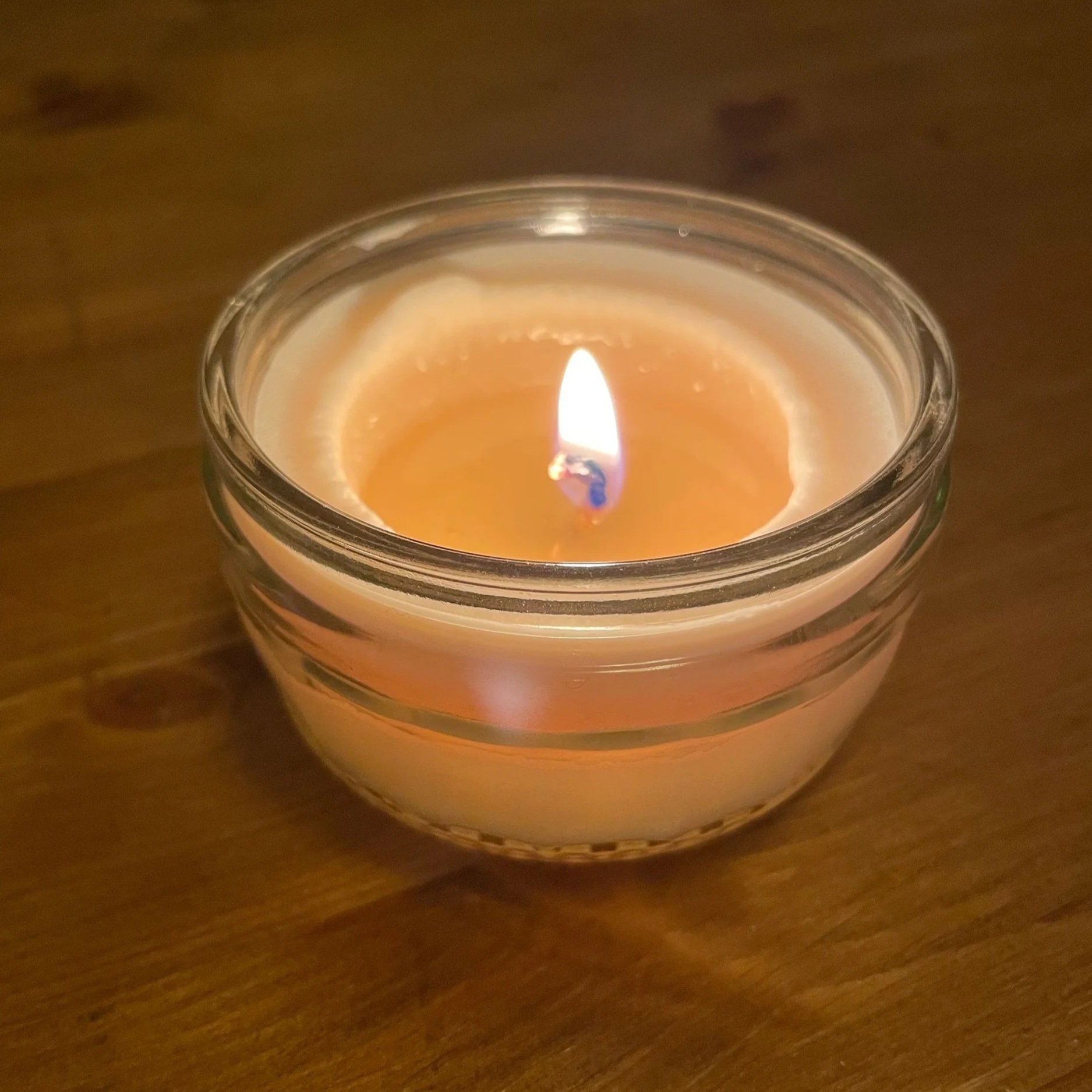
An upcycled pudding jar - functional and sustainable
Yet there's a catch: not all glass makes it back. While the UK's packaging recycling rate is high, much glass still ends up in general waste, and contamination in "single-stream" collections means some recycled glass is too dirty for re-melting. The good news is that glass doesn't degrade — every bottle and jar that does get recycled carries its full energy savings forward, indefinitely.
And there's an even more energy-efficient option: upcycling.
Reusing glass at home keeps it in use without any industrial processing at all. A cleaned-out pasta jar becomes a perfect food storage container for leftovers or dried goods, and an empty candle jar finds new life as a holder for pens, plants, or tea lights. At Verdesca.co.uk, we put this into practice by turning reclaimed glass jars into handmade candles — proving that a jar’s first life doesn't have to be its last. So the next time you finish a jar, think twice before throwing it away: wash it out, give it a second purpose, and only then — when it truly can't be reused — let recycling take over.
Every step up the chain saves energy, and every jar kept out of the furnace saves that 40% energy cost and minimises the carbon dioxide emissions in our atmosphere. That feels like a great set of reasons to wash that jar and give it it’s second, or third life.

Hand poured small soy candle. Super eco - these are made in upcycled dessert pots, giving a new life to something ordinarily thrown away! Perfect for fireside, bathside and kitchen window ledge.
Soy wax has been chosen for these ‘Phoenix Candles’ as it is a plant-derived wax and has a slower burn rate than paraffin-based equivalents.
'Rhubarb & Black Plum’ scent - Super fruity fragrance.
'Basil, Lime & Mandarin’ scent - Super fresh homely fragrance.
'Rocksalt & Driftwood’ scent - Masculine, musk fragrance, and a favourite in our house.
‘Lemongrass & Ginger’ scent - Spa zen, fresh fragrance
‘Christmassy Spiced Apple’ scent - Warm apple, clove & cinnamon, hint of pine fragrance
♻️ Doing our bit for the environment ♻️
These candles have a burn time of approximately 10 hours.
If you too have a love of candles around your home, then Phoenix Candles are the brand for you. Get that flickering flame and feel good about doing your little bit for our environment.
Love it? Buy it. Have it.
Cited References & Data Sources:
British Glass — "Recycling" (UK recycling rate 74.2%, 580 kg CO₂ saved per tonne re-melted, 90% collection ambition): https://www.britglass.org.uk/our-work/recycling
AGC Glass Europe — "Glass Recycling" (1 tonne of cullet saves 1.2 tonnes of virgin materials; 10% cullet increase cuts furnace energy ~2.5%): https://www.agc-glass.eu/en/sustainability/decarbonisation/recycling
… or maybe you want to read more on:
This Article Topic Tags